A mix of mild coastal weather, specialized physiology, and human backyard feeders allows Canada’s smallest winter bird to thrive where others flee.
Mention Vancouver Island and most will envision its iconic predators—orcas slicing through the Strait of Georgia, bald eagles scanning the tree line, or black bears foraging along tidal flats. But one of the island's most remarkable residents weighs less than six grams, roughly the mass of a single house key. While other hummingbird species flee south before the first frost, the Anna’s hummingbird stays put, braving Canadian winters year-round.
The coastline of Vancouver Island is one of the mildest regions in Canada, with winter temperatures hovering between 0 and 12 degrees Celsius (32–53°F). Ocean winds moderate both summer heat and winter freezes, creating an extended growing season unusual for a place this far north.
For local hummingbird enthusiast Allie Hasbany, the Anna's resilience makes the species stand out.
“They’re amazing, resilient little creatures,” Hasbany says. “They’ve cultivated a lifestyle, both alongside humans and on their own, to push through Vancouver Island’s winters.”
Historically confined to coastal California, the Anna’s hummingbird (Calypte anna) has expanded steadily northward since the 1930s. A mix of suburban backyard feeders, introduced winter-blooming plants, and a warming coastal climate allowed them to take root in British Columbia. Environment and Climate Change Canada estimates that up to 500,000 adult Anna’s hummingbirds now reside in Canada, predominantly along B.C.’s southern coast.
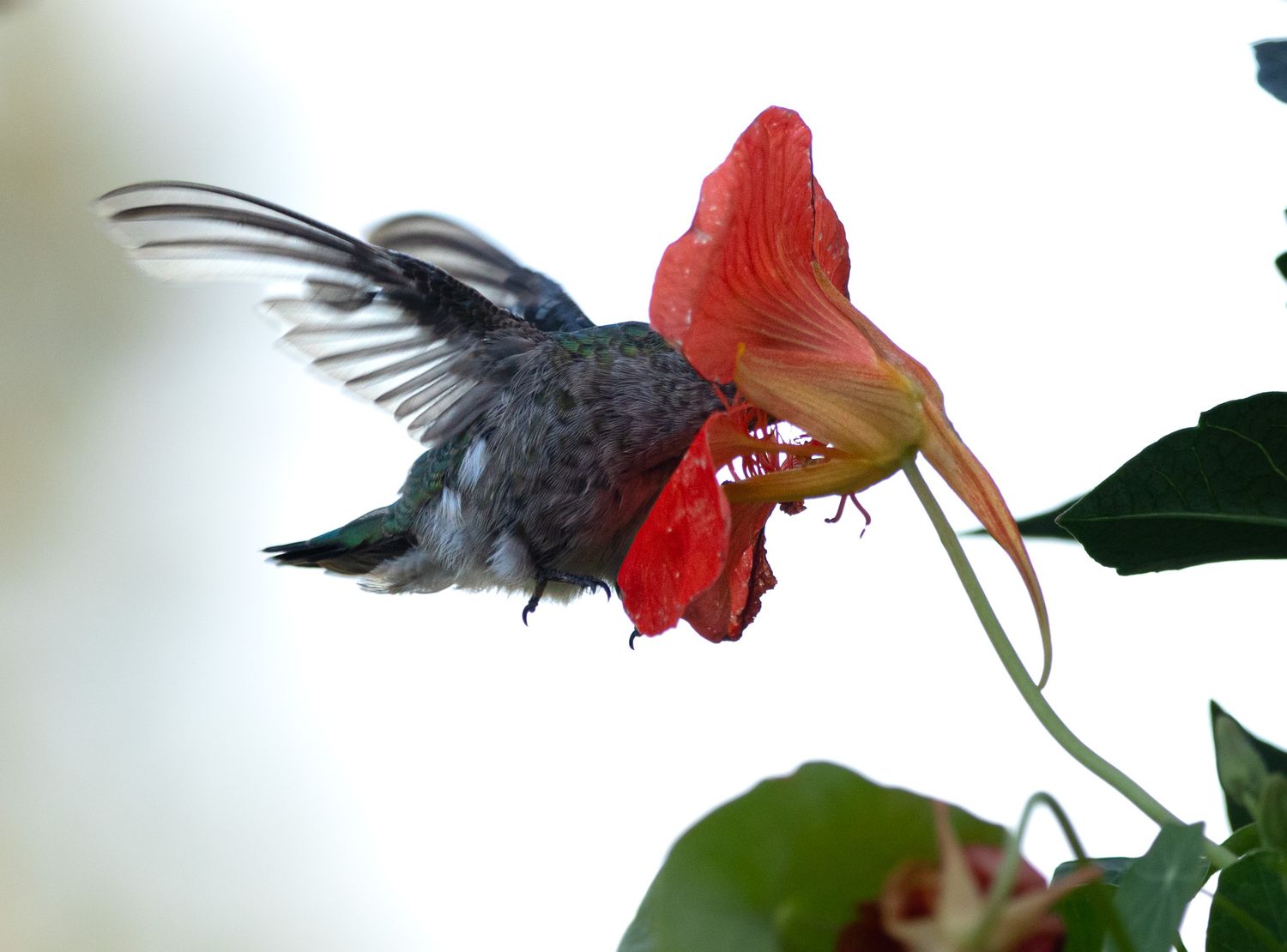
A female Anna’s hummingbird feeds on sweet nectar from a blooming nasturtium. Although nasturtiums are non-native to British Columbia, the vibrant flowers have become a preferred food source for the local species.
Extreme Physiology and Natural Foraging
Surviving a coastal winter requires extraordinary metabolic management. At rest, an Anna's hummingbird’s heart beats between 420 and 460 times per minute—more than four times the rate of a healthy human. To survive freezing nights without starving, the bird enters torpor, a state of deep physiological suspended animation. Its body temperature plummets, its heart rate drops to as low as 50 beats per minute, and it fluffs its feathers to trap heat, sleeping motionless until morning.
When the sun comes up, refueling is critical. While backyard feeders are popular, these birds do not rely solely on human generosity. Naturalist and cinematographer Eric Pittman, who has spent years filming Anna’s hummingbirds, cautions against giving feeders full credit for the species' range expansion.
“I’m hesitant to say feeders are the primary reason for their population rise,” Pittman explains.
Pittman notes that Anna’s hummingbirds are resourceful, opportunistic foragers. They harvest spiders from bark, lick sap from fresh Douglas fir sprouts, and glean insects hidden under evergreen leaves. Exploring a small patch of forest near his home, Pittman observed that "under every green leaf, there’s some kind of food for these hummingbirds."
Hasbany sees a similar pattern in her garden. While birds frequent her feeder during late winter, their visits drop off as soon as neighbours' apple trees, lavender, lilacs, and lilies bloom in spring.
The Hidden Hazards of Backyard Feeders
While supplemental sugar water can offer a lifeline during lean months, unmaintained feeders carry deadly risks. Warm snaps can encourage fungal growth in unwashed reservoirs, causing hummingbird candidiasis. This infection causes a bird's tongue to swell and stick out of its mouth, preventing it from drinking or catching insects. Pittman once filmed a mother hummingbird suffering from the condition as she attempted to care for her chick.
“One of the hardest things I ever filmed was a mother trying to feed her newly fledged chick, but her tongue wouldn’t work,” Pittman recalls. The chick waited beside her for hours, unable to receive food.
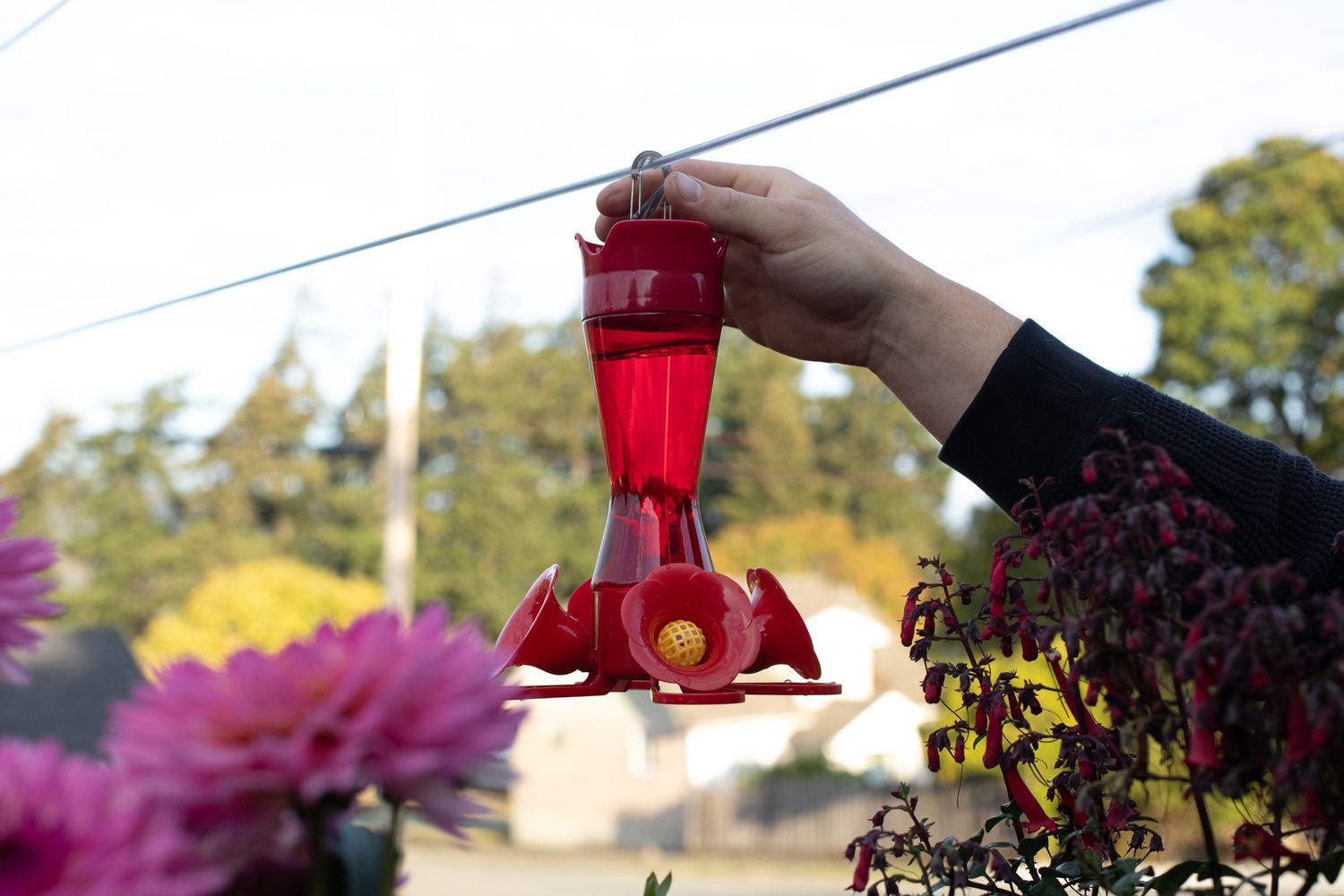
Cleaned and refilled with fresh sugar solution, a feeder awaits visiting hummingbirds. Frequent cleaning prevents bacterial growth that can harm feeding birds.
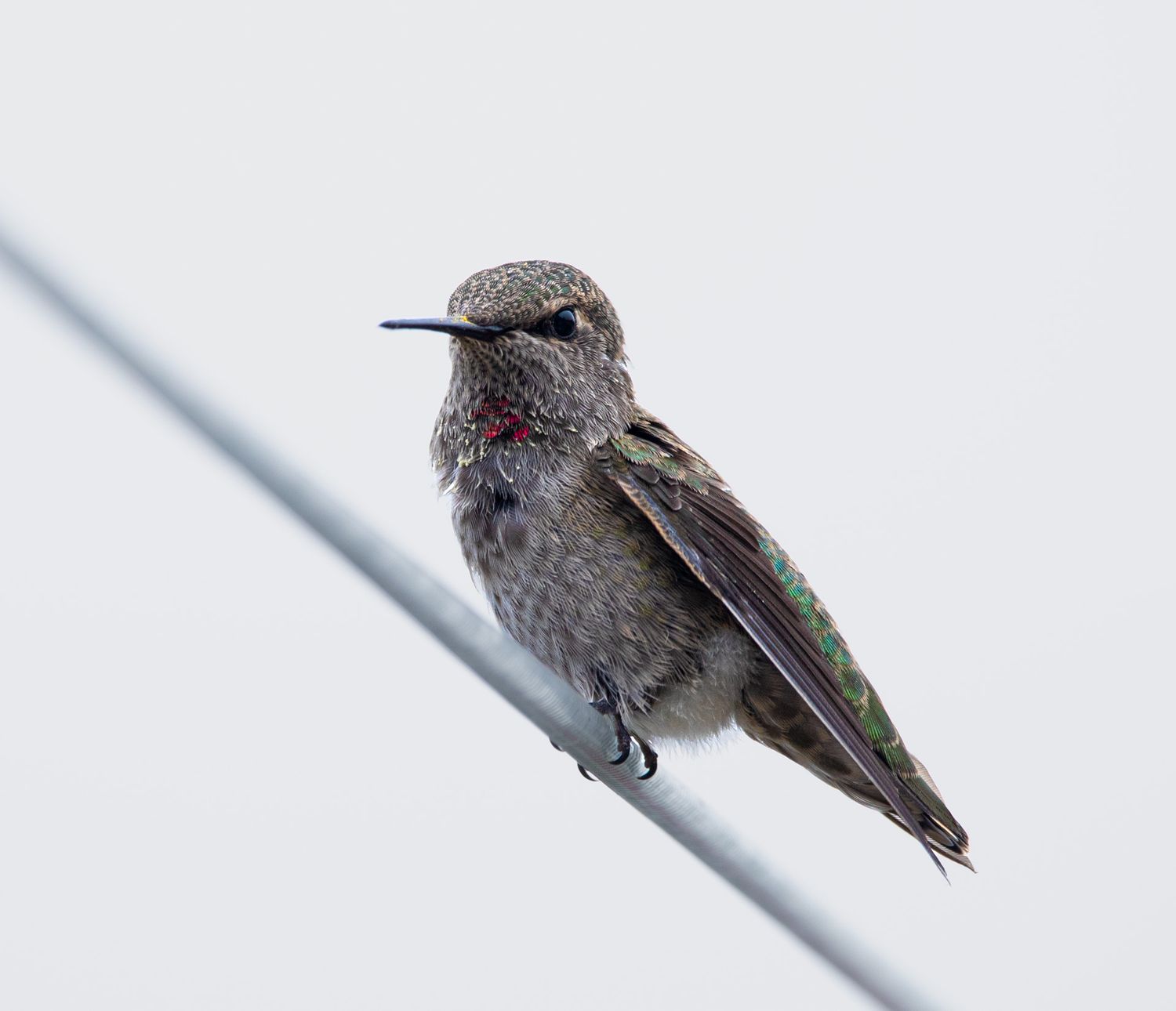
Pausing between feeds, a female Anna’s hummingbird keeps a watchful eye on a backyard nectar feeder before making her next approach.
At MARS Wildlife Rescue, manager Megan Erickson sees how difficult it is to diagnose these tiny patients. The symptoms of candidiasis closely mimic head trauma—another frequent hazard for hummingbirds.
“Hummingbirds are so small that any kind of trauma can have a massive impact,” Erickson says. Because a bird’s condition can deteriorate within 24 hours, her team often treats incoming patients for head trauma while evaluating whether antifungal medication is required.
Erickson notes that suspected fungal cases make up roughly 5 to 10 percent of the hummingbirds brought to the facility. A key indicator is unusual stillness: a bird sitting motionless near a feeder for hours is often showing the first signs of severe illness.
Fortunately, prevention is straightforward. Erickson recommends cleaning feeders every two to three days during warmer weather using soap and water, followed by a 10-minute soak in a 10 percent bleach solution.
A Drive to Endure
Beyond their flexible diet and physical adaptations, Anna’s hummingbirds possess a relentless drive to survive. Pittman recalls documenting a one-legged female he named Bailey. Despite her injury, Bailey successfully constructed three nests in a single season, braving heavy windstorms and human foot traffic.
“I didn’t think a bird with one leg could build a nest until I saw it with my own eyes,” Pittman says. “They don’t have an instruction manual. That’s just what they do.”
Ultimately, the survival of the Anna’s hummingbird on Vancouver Island comes down to taking advantage of whatever the landscape offers—whether that is fir sap, winter insects, spring blossoms, or a well-maintained backyard feeder. And sometimes, Pittman observed from Bailey, it means carrying on despite what seems like an impossible obstacle.