Researchers studying the little-known right whale populations off of Western Australia have found that changing ocean ecosystems are halting the recovery of a once-abundant sentinel species.
WORDS AND PHOTOGRAPHS BY ALIYA SIDDIQI | summer 2026 'wild witness' mentee
EDITS BY AVERY SCHUYLER NUNN
Approaching the clear, turquoise waters and fine, white sands along the South Coast of Western Australia, signs staked in front of the picturesque dune entryways remind visitors of its risks:
Warning: Dangerous coastlines. Lives have been lost here.
Warning: These beaches are unpatrolled. Dumping waves. Strong currents and rips. Shark activity. Unstable cliff faces.
The contrast is fitting for a coastline where freeway tarmac shifts into endless corrugated dirt roads, little mobile reception, and recovery gear decorating every passing vehicle. To a foreigner, the lack of access to emergency help is often accompanied by a sense of unease. To an Australian, it is emblematic of the freedom and adventure that this side of the country has to offer.
Between the towns of Albany and Esperance, isolated sandy bays dot the remote coast. These sheltered spots offer shallow, calm waters protected from the strong prevailing winds that occur during the rough winter months. And scientists who have spent the past six years studying these bays have come to recognize another recurring visitor: the Southern Right Whale (Eubalaena australis).
Katy Fannei, a master’s graduate from the University of Western Australia, was confused at the gap in knowledge about the whales’ seasonal residence along the South Coast.
“You can watch them from shore without any vessel, yet no one knows about them. Why?” she says, “Because they're so rare. That just fascinated me about it.”
These docile, road-train sized whales of the western subpopulation in Australia showed significant recovery from their near extinct numbers starting in the 1970s. Commercial whaling in the 19th and 20th century is estimated to have dwindled the Australian population from approximately 15,000 to less than 300 individuals. They were colloquially dubbed 'right' whales by whalers because their high blubber content made them positively buoyant—and thus the 'right' whales to hunt.
However, research from decades-long monitoring out of South Australia has indicated that the population has plateaued since 2015. The number of calves sighted has been in decline since 2017, and the time between females having calves has increased from a three- to four-year calving cycle to four- to five-years.
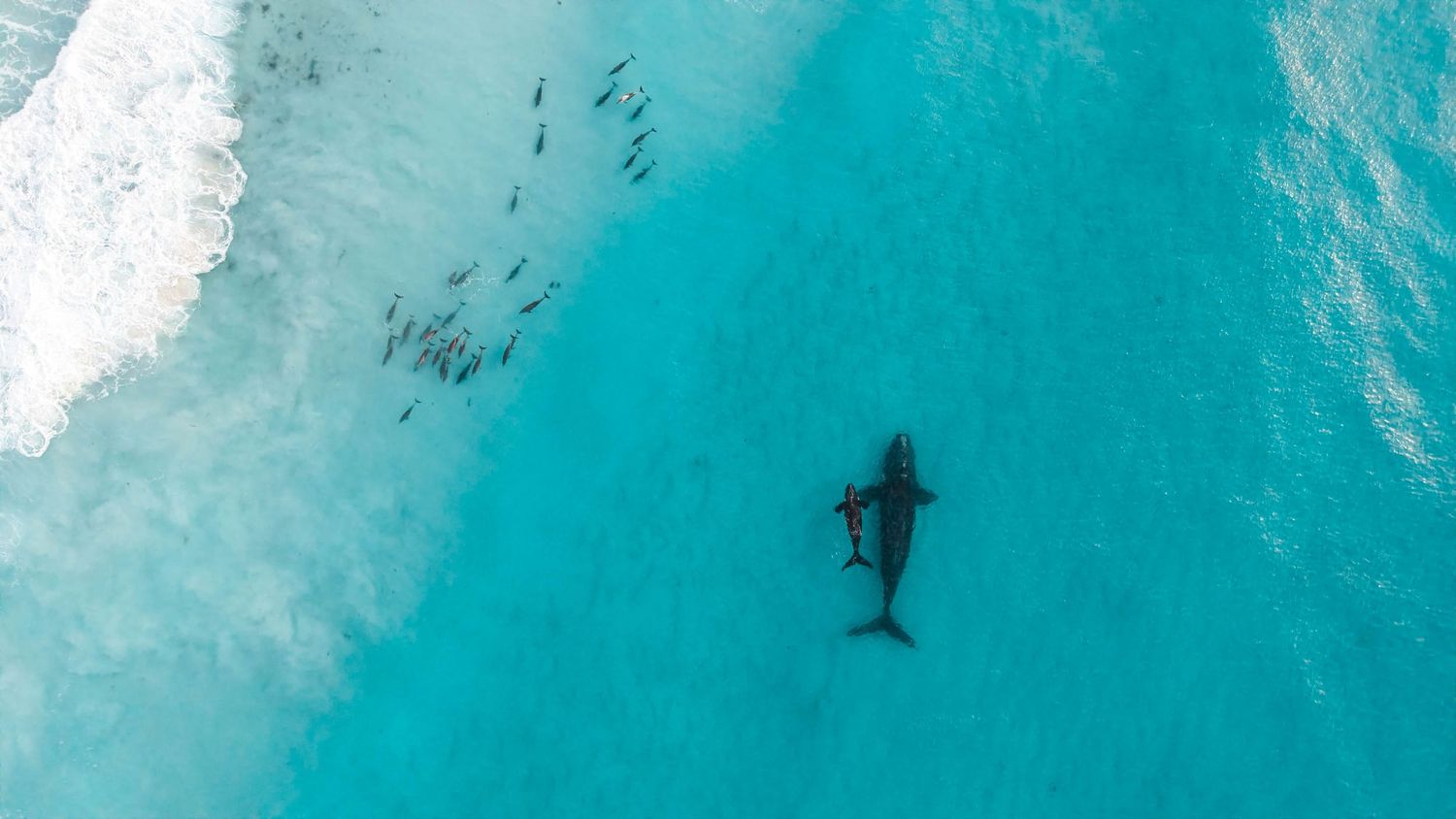
Morning traffic. A mother and calf pair swim along the coast of the bay as a pod of dolphins enjoy playing the surf break.
Approximately 150,000 southern right whales were killed in the southern hemisphere until the international whaling ban was put in place in 1986. While much healthier than the eastern Australia subpopulation and those in the Northern hemisphere at approximately 2,346-3,940 individuals, they are still only at a quarter of their pre-whaling numbers and numbers are now stalling.
Though most whale species are difficult to monitor due to their transient nature, Southern Rights demonstrate site fidelity. This cultural ‘migratory memory’ is noted by some scientists as a potential factor to successful recovery in whale subpopulations. Southern Rights reliably aggregate in specific bays and are typically found only two hundred meters from the shoreline, most often in mother-calf pairs.
“The most fascinating part about working on Southern Right Whales is that they’re a message in a bottle of a whole ecosystem far, far away,” notes whale researcher Max Fabry, who has conducted annual drone monitoring on the whales with Fannei since 2020. “Every year, they come in pretty good numbers to our coast and tell us their story of how they're doing,” he continues.
While warming oceans and declining krill populations in the Southern Ocean threaten to push these gentle giants to their ecological limit, Western Australia’s rugged, undeveloped coastline offers a rare second chance. Protecting their calm, coastal nurseries is a community-driven imperative to save a species on the brink of plateauing into extinction.
“They reliably come to the same aggregation area, so shore-based whalers would just set up a station and hunt that location to extinction pretty much, and then move on to the next,” says Fabry. He explains that they are capital breeders; they put on a lot of weight in one to two years to energetically afford a calf, have an 11-month pregnancy, and then care for the calf over the next year.
“It's a big investment. And they don't seem to be able to get enough food to do that, and that is undoubtedly due to a changing ocean,” he says. Six years of monitoring has now identified multiple bays along the South Coast that the whales aggregate in and serve as nurseries for their calves.
“I think we have an absolutely amazing opportunity here,” says Fannei. “We are sitting in a hotspot niche. I don't even know how to describe it. It's a very, very, valuable location for the species, the whole South Coast.”
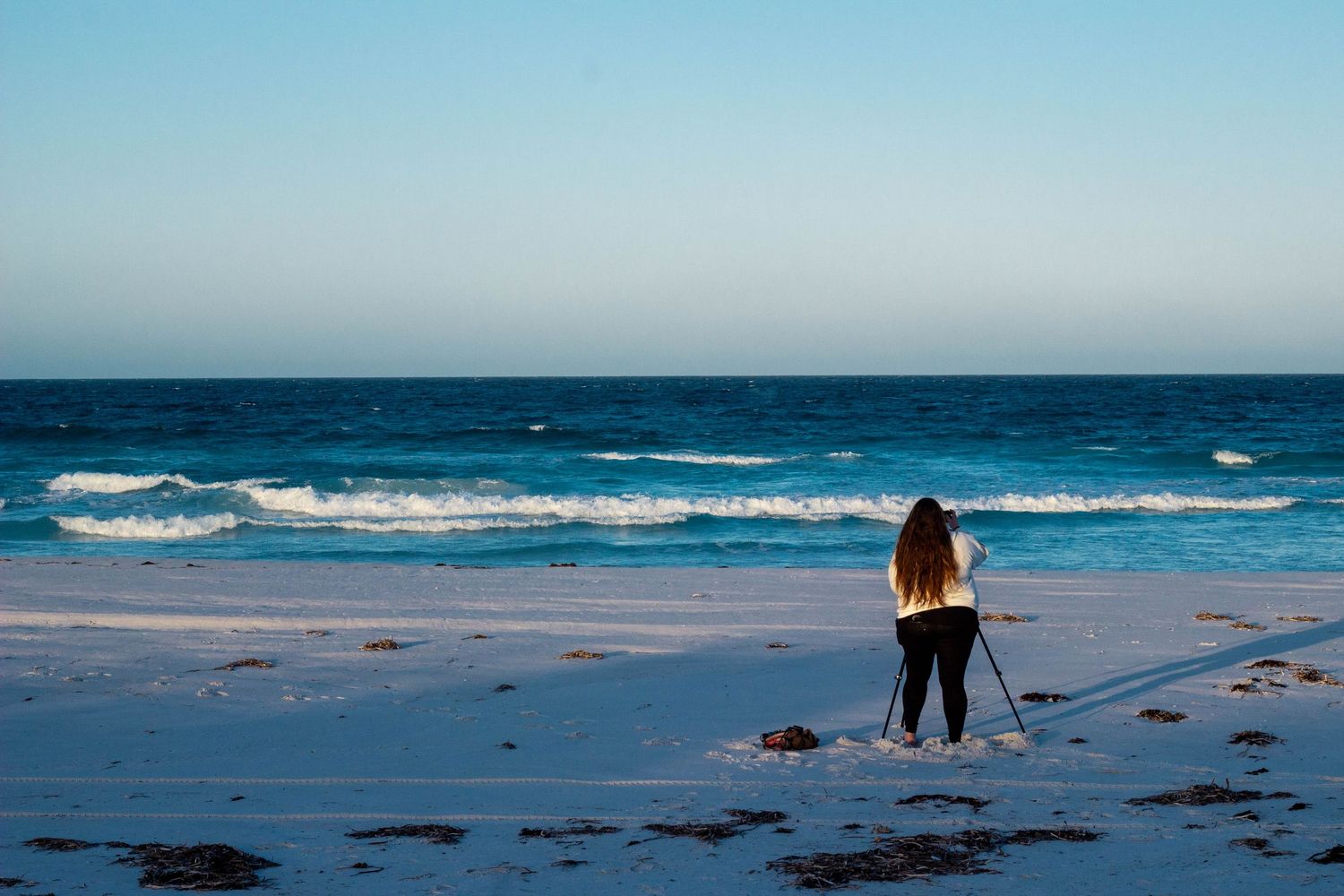
Local resident and photographer Sarah captures Southern Right whales from shore. Nursing mother-calf pairs easily be spotted in preferred habitat bays just 200 metres off the beach.
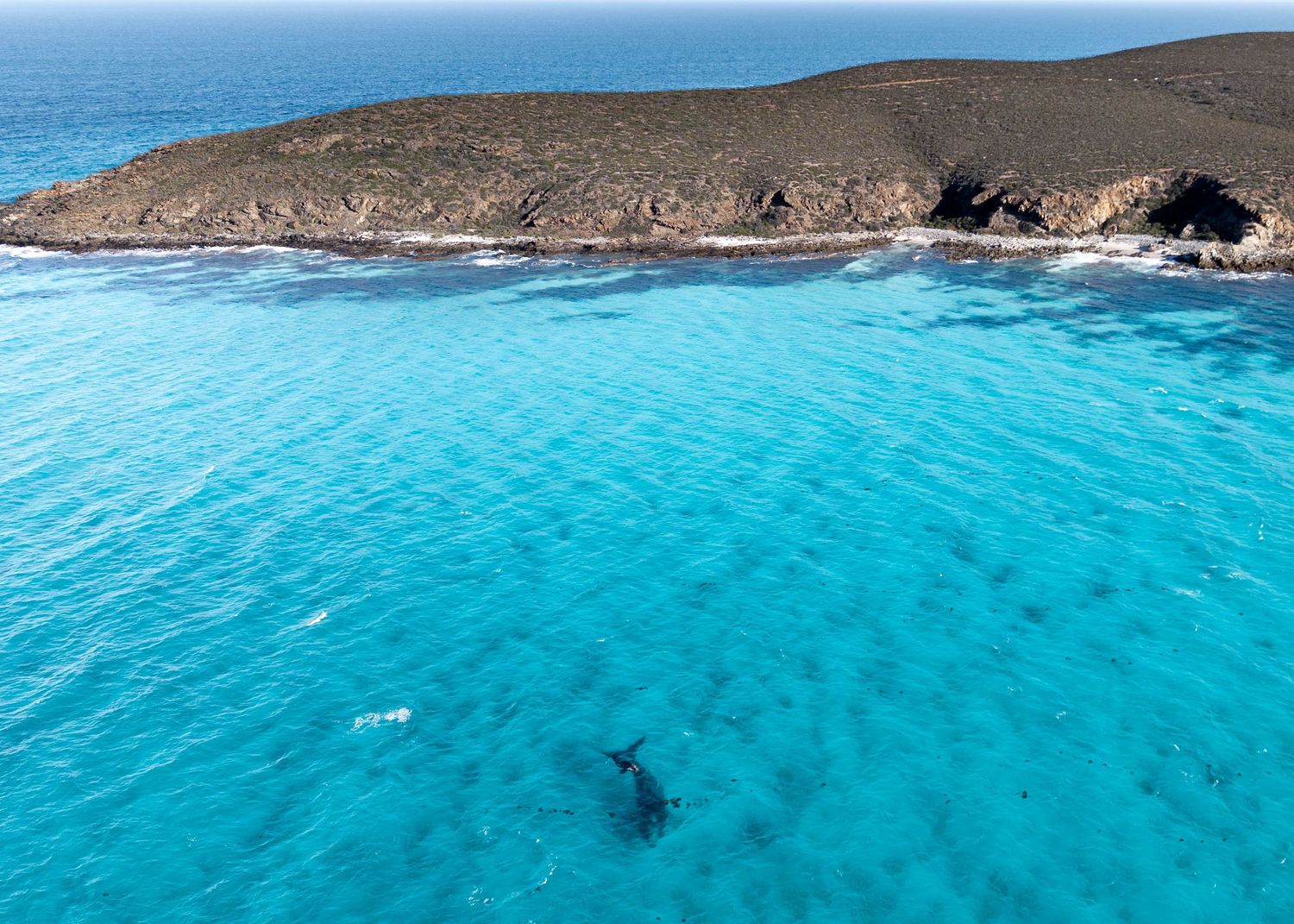
A solo Southern Right whale swims off a remote headland along the South Coast of Western Australia. These whales are easily spotted in calm, remote bays during the winter months.
However, that wasn’t the case when Fannei and Fabry initially started searching in the City of Albany. Despite multiple bays that may have suited whales in the past, they theorise vessel disturbance from the port and urban development has likely deterred them.
“The indigenous name for [Princess Royal Harbour] is Mamang Koort, which stands for heart of the whale. So, it tells you what it must have been at one point,” says Fabry. To find the missing whales, scientists enlisted local community support. Partnering with aviators David and Lisa Marie Elliot and their flight club, the team introduced volunteer-led plane surveys to track the population.
“They started talking to their friends [and we were told], ‘Oh, what do you mean there's no whales? We've got about seven mother calf pairs in our bay,’” recalls Fannei.
While plane surveys offered a high-level view across 450 kilometers of coastline between Albany and Esperance, Fabry needed ground-level precision to identify individual animals. At first light, he packs his Toyota Prado with thirty drone batteries, recovery gear, and medical supplies. Flying high-altitude planes avoids disturbing the whales, but high-resolution photo identification requires closer range. Using LiDAR-equipped drones under special research permits, Fabry endured 16-hour field days along technical 4WD tracks and soft beach sands to build a comprehensive catalog.
With over 500 individuals cataloged—guided by the unique callosity patterns on their heads—the team can now definitively prove that a significant portion of Australia's Southern Right population relies on the South Coast. Their data reveals that mothers frequently return to their birth bays, but also move between different sheltered spots throughout the season.
“The interest for me is tracking returning mothers to assess their health over time,” Fabry says. “Having an accurate map of how whales use this coast is vital to demonstrating why this habitat needs protection.”
That research is now powering grassroots conservation. In Albany, local catchment group South Coast NRM received funding in 2024 to train community members for the Right Whale Tracker project, extending monitoring efforts toward Hopetoun.
“When people realize whales come here to nurse their calves rather than just pass through, they immediately ask how to protect them,” says project coordinator Laura Bird. “Data is critical, but policy change only succeeds when the community feels connected to the cause.”
That local stewardship is vital. In places like Argentina, vessel traffic has displaced Southern Rights from preferred habitats. Without proactive protections, increased boating along Western Australia's South Coast could push these rare whales away once again. For those willing to navigate the endless dirt roads to these remote aquamarine bays, the rewards are an extraordinary reminder of what is worth protecting.
“If you have the time or make it a habit, you can see Southern Rights every single day,” Fannei says. “This is their home.”
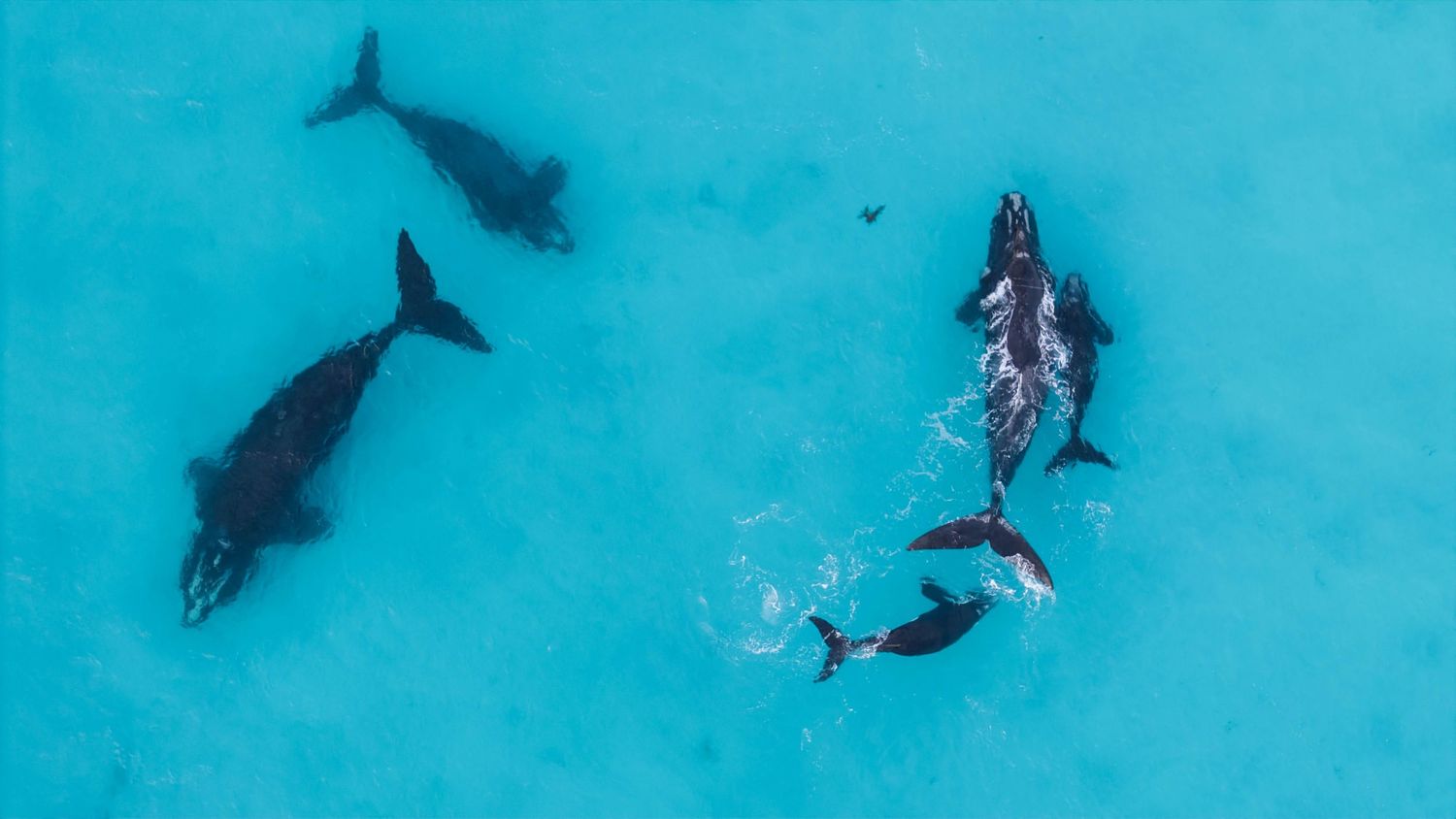
A peaceful moment in the shallows—and a glimpse of what the future could look like for a species rebuilding its place along the South Coast. With local communities stepping up to protect these remote nursery bays, the future of Western Australia’s Southern Right Whales rests on ensuring they always have a safe haven to return to.